

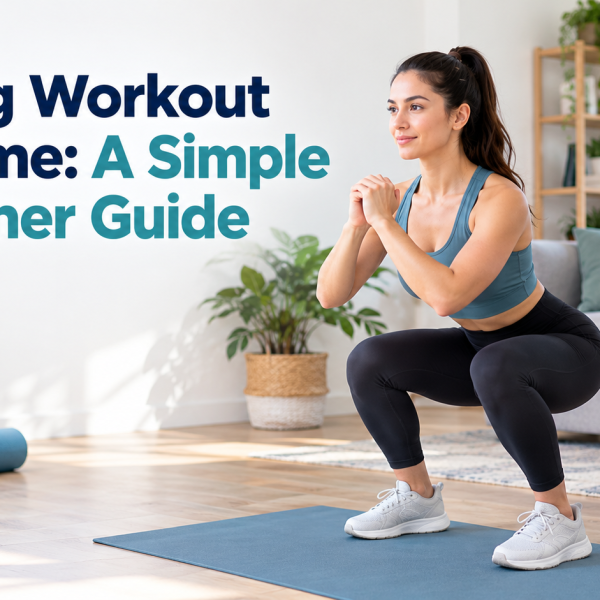
The gym where I exercised closed by 9 p.m., and I used to leave by 8. Over many months, I would tell myself that I was going to work out the next morning when I had more free time. I never did. All that I ended up sticking to was exercising at home using just my body weight.
Maybe that sounds familiar. Plenty of people are looking for a real toning workout at home these days, and you don’t need much square footage to do it well. What you do need is a plan that works your muscles on purpose, not one that just has you moving around for twenty minutes and calling it done.
What “toning” really means
The word “toning” gets bandied about all the time, but it’s hardly ever what people assume it means. There’s no toned setting hiding somewhere inside your muscle. What’s actually happening is two things at once: the muscle itself gets stronger, and the layer of fat sitting over it gets a little thinner. Line those two up and you get a visible shape under the skin.
Most home workout guides skip that part entirely, which is a shame, because it changes how you should train. Strength has to come first. Without it, there’s nothing underneath to reveal once the fat thins out. And no, a toning machine at some gym isn’t doing anything different behind the scenes. Same process, fancier upholstery.
How to build a home strength routine
Start small. Five to seven exercises cover a full session, and the shape of a good one is pretty simple: warm up, do the strength work, and cool down.
The warm-up doesn’t need to be complicated. Five minutes of marching in place, some arm circles, maybe a lap up and down the stairs if you’ve got them. You are only getting the blood flowing into the muscles prior to asking the muscles to do any work.
When doing the working sets, you should try to use exercises that involve the large muscle groups such as legs, back, and chest instead of small isolated muscle exercises. Large muscle exercises utilize more energy and produce faster results in terms of strength gains, especially when time is limited.
Home toning exercises you can do with no equipment
None of these exercises requires any equipment, only space on the ground to stretch out. Push-ups come next, and these will really hurt at first. This is perfectly alright and expected. If you cannot do a regular push-up yet, you can do one from your knees or by pressing against the wall. Ten repetitions is an adequate start.Glute bridges require less strain from the joints. Lie down on your back and bend your knees and lift your hips towards the ceiling and slowly lower back down. Fifteen repetitions or so.
Then there’s the plank, which looks boring and is anything but. Straight line from your head to your heels, using your forearms and toes for support. Twenty seconds may not seem like a long time until you’re doing it.
Finish with standing lunges. Step forward, drop your back knee nearly to the floor, and push back up. Ten per leg one side always seems to be weaker than the other, and that’s normal too.
Jumble these five up in any order that strikes your fancy, and voila! You have yourself a good series of home muscle-toning workouts for free. Resistance bands and small weights can come into play once the exercise ceases to be an actual battle.
A toning workout for beginners: sets, reps, and rest
If you’re just starting out, go smaller than your ego wants you to. Two sets per move, ten to fifteen reps a set, and thirty to sixty seconds of rest between them that’s plenty to build from without burning out in week two.
Two or three sessions a week is enough. Here’s what trips people up: muscles grow on rest days, not during the workout itself. Skip too many of those chasing faster results, and progress stalls. But occasionally, it can turn into an injury.
No need for any complicated applications here, all you will need is a notes page on your cell phone. Note down the number of reps and the feeling of the set performed. After doing so for a few weeks, you will know when to increase your rep numbers or make things tougher for yourself by advancing the exercise.
If you are interested in a sample routine, have a look at this: strength on Monday, walking or complete rest on Tuesday, strength again on Wednesday, rest on Thursday, strength on Friday, followed by easy stuff on weekends. It leaves enough room to recover without letting the habit quietly die.
How to tone muscles at home over time
Getting stronger once isn’t the hard part.Staying strong on a monthly basis depends upon one concept: progressive overload. This involves challenging your body by making it do just a bit more than what it is used to doing.
There’s more than one way to apply it. Add a rep. Slow the movement down. Hold the hardest point of the exercise a beat longer than feels comfortable. Or grab something heavy from around the house: a full water jug, a bag of rice, or a couple of soup cans if that’s what’s in the pantry. Small increases every week or two are plenty. You don’t need to blow up your whole routine every Monday to keep progressing.
Food and sleep are doing more work here than people give them credit for. Muscles repair with protein and rest, not just with reps in the moment. According to the Centers for Disease Control and Prevention, adults should engage in muscle strengthening activities at least twice weekly, in addition to remaining active throughout the other days of the week.
Common mistakes to avoid
Rushing takes top priority. A quick, sloppy set does not tax the muscle as much as a slow, methodical one does; therefore, if you don’t have much time, it’s better to take your time than do extra reps. Skipping the warm-up is close behind and the first thing that gets skipped if you’re rushed. Cold muscles strain easily. Those five minutes at the start aren’t optional so much as they’re cheap insurance.
Then there’s impatience, probably the most common mistake of all. People expect a visible change after a week and quietly give up when the mirror looks the same.Real transformation often occurs somewhere around the four to eight-week mark, occasionally occurring later based upon your starting point. The National Institute on Aging notes that the consistency of strength training, even in small doses, accumulates over time. Being consistent is better than intense one week followed by two weeks away.
Start your first session today
You don’t need a gym membership or a personal trainer standing over you. A toning workout at home really does come down to a small patch of floor, a little time, and a plan you’re actually willing to repeat. Try the five moves above this week, two or three times, and just pay attention to how your body responds.
Want full routines, printable trackers, and video demos to go along with it? Visit Fit Force Lab and grab a beginner plan built around your own schedule.
FAQ
Do I need equipment for a toning workout at home?
No, not at all. You can achieve true strength through body-weight exercises like squats, push-ups, and plank. Bands or small dumbbells should be included when you find the above exercises easy for you.
How many days a week should I do home toning exercises?
Two to three sessions works well for most beginners, as long as there’s a rest day somewhere in between.
How long until I see toning results?
It varies. Some people feel stronger within two or three weeks, but visible muscle definition is usually a slower burn, closer to four to eight weeks of steady effort.
Can I lose fat with a bodyweight toning workout alone?
It contributes, but it’s not the whole equation. Weight loss can also be achieved through the combination of general fitness and dietary efforts as well, hence the exercise program is effective when combined with such factors.
Is a toning workout for beginners different from one for advanced exercisers?
The moves themselves barely change.What changes is the number: newbies do less with lots of breaks and progressively increase reps, slow down the movement, or add weights as they gain strength.