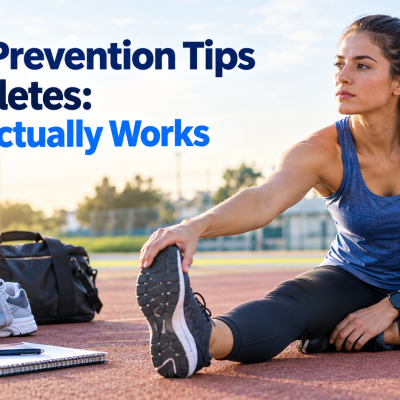

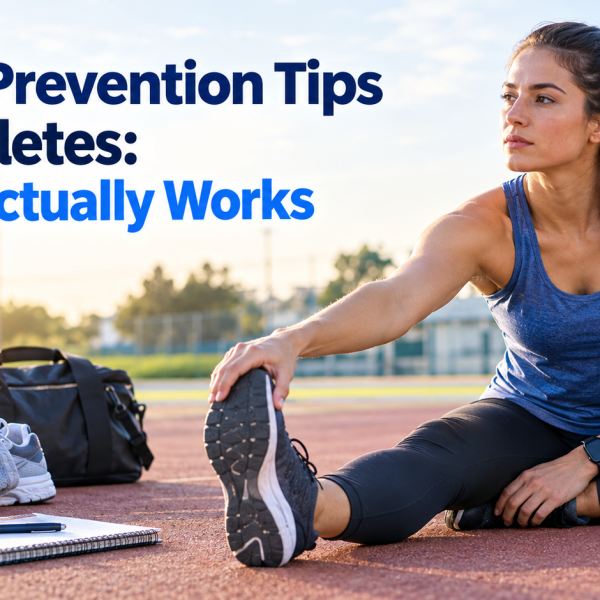
A high school soccer player rolls her ankle in week three of the season. Not from a bad tackle. Just from skipping her warm-up to save ten minutes before practice. Across town, a weekend runner tears his calf in July. He jumped from three miles a week to twelve, all at once, because the weather turned nice and he got a little carried away. Neither one thought of themselves as reckless. They just skipped the boring part. And the boring part is usually where good injury prevention tips for athletes actually live.
Here’s a number that doesn’t get repeated enough. Overuse injuries cause about 42 percent of injuries in individual sports. They cause about 33 percent in team sports. So almost half the time, the injury wasn’t bad luck. It built up over weeks, and somebody could have caught it early. This guide covers what actually works, not the same recycled checklist everyone’s already scrolled past twice this month.
Why Injury Prevention Tips for Athletes Get Ignored
Most athletes understand that they should warm up, stretch, and take breaks. Why are people still getting hurt?
Being aware does not equate to being compliant. Ten minutes of warming up is a waste of time when you only have five. Resting is being lazy when your teammate works out seven days a week and brags about it.
These injury prevention tips for athletes only work if they’re part of the weekly routine. Don’t just save them for whenever there’s spare time, because that time never seems to show up.
A lot of training programs fall short right here too. They chase speed and strength and treat prevention like an afterthought, something bolted on later if the season goes badly. The healthiest athletes rarely have the fanciest plan. They’re just repeating the same small habits every week, game or no game, without much drama about it.
Warm Up Routine for Athletes: What Actually Matters
A proper warm-up routine does not involve running around and touching your toes two times. This routine entails increasing the heart rate and stretching the muscles that will be worked out in the activity. In addition, it activates the nervous system, making the body more responsive to fast actions on the playing field.
The time taken in warming up should range from five to ten minutes. The first phase should involve mild exercises such as jogging and jumping jacks that will slightly increase body heat. Then the next phase will involve dynamic stretching that involves movements in the joints used when playing. Save static stretching, the kind where you hold a position still, for after practice instead of before.
Skipping this step is probably the top reason these injury prevention tips for athletes never turn into results. It’s the easiest thing to cut when you’re short on time. It’s also the one that matters most in the first twenty minutes of activity. A true list of safety tips for any athlete will place the warming up as number one on the list and not hidden away in a paragraph about equipment.
Sports Injury Prevention Exercises Worth Doing Every Week
Sports injury prevention exercises don’t require a gym membership. Most of the useful ones take fifteen minutes and a patch of floor.
Balancing on one foot develops the stabilizing muscles in the ankles and knees, which are often the first muscles to fail when you make an abrupt directional shift. Balance on one foot for thirty seconds three times per side a couple of times each week. It seems kind of ridiculous.
Hip and glute strength matters more than most athletes realize. Weak hips get linked to knee pain constantly, especially in runners and anyone doing a lot of jumping. Glute bridges and lateral band walks, done two or three times a week, go further than people expect.
Core stability work, like planks and dead bugs, protects your lower back during twisting and impact. Injury prevention tips for athletes tend to land on these same three spots again and again: ankles, hips, and core. That’s because a huge share of sports injuries start right there.
Overuse Injury Prevention: The Rule Most Athletes Break
Overuse injury prevention comes down to one number. A lot of athletes ignore it: the ten percent rule. Don’t increase your training volume, whether that’s mileage, weight, or practice hours, by more than about ten percent per week.
The Stanford Medicine Children’s Health sports medicine team has a warning. Too much training in one sport, without enough recovery, is one of the biggest causes of injury and burnout in young athletes. Their injury prevention resources page goes into more detail if you’re curious.
Picture a basketball player who plays for one team all fall, then jumps straight into a second league in winter with zero break in between. That’s a textbook setup for an overuse injury, and coaches see it constantly. The body needs a real off week now and then, not just a slightly lighter practice. It’s one of the injury prevention tips for athletes that gets skipped most often. Sitting out just feels like falling behind everyone else.
Recovery Tips for Athletes That Aren’t Just “Rest More”
Recovery tips for athletes usually get flattened down to “sleep and rest.” That’s true, but it leaves out most of the picture. Sleep is when the bulk of tissue repair happens. Seven to nine hours matters more than any recovery gadget you’ll see advertised on your feed. Proteins and carbohydrates consumed post-workout will also be beneficial, as they will allow you to restore the muscle tissue and replenish the energy reserves used during exercise.
The importance of hydration cannot be overestimated as well. Even slight dehydration can result in cramps and slow down reaction time, thus increasing the risk of injuries without even being noticed. However, hydration is an element that is always included in any injury prevention recommendations made for athletes. Still, it receives less attention than stretching and equipment usage. STOP Sports Injuries is a campaign launched by the American Orthopaedic Society for Sports Medicine. Their prevention guidelines are worth a look if you coach or manage a young athlete.
If you’re building a full training plan, FitForce Lab’s injury prevention tips for athletes can help. Your program will be customized to your schedule; there is no cookie-cutter routine copied from the Internet that will fit your life.
How to Prevent Sports Injuries With the Right Gear
How to prevent sports injuries also comes down to something simple. Wear gear that fits your sport and your body. It’s one of the more overlooked injury prevention tips for athletes, mostly because gear feels fine right up until the moment it isn’t. Worn out running shoes lose their shock absorption long before they look worn out, usually somewhere around 300 to 500 miles in. Even properly fitted cleats or pads can affect your stride so much that an injury is incurred that has nothing to do with your physical fitness.
Have a coach or a trainer look at your equipment at the beginning of every season, not just when there’s something wrong already. It takes five minutes to identify an issue and save yourself from six weeks’ worth of rehabilitation. It‘s about the easiest one on this whole list to actually follow through on.
If you want a second opinion on your current setup, talk to the team at FitForce Lab about what gear and habits actually fit your sport.
Getting Started This Week
Nobody needs to overhaul their whole routine tonight. Choose either one: warm-up, ten percent rule, or sleep goal. Stick to whichever one is easiest for you for two weeks and then add another. It’s always better to have small and dull habits instead of a perfect plan, which you give up on in ten days. In general, useful suggestions on injury prevention for athletes involve less drastic changes and more habits that stay.
Frequently Asked Questions
What are the most notable tips to prevent injuries for athletes?
Warm up properly. Gradually increase the load during training. Strengthen your hips, core, and ankles. Have enough sleep.
How long should warm-ups last for athletes?
They should last for about five to ten minutes. You should begin with easy movements and then proceed to dynamic stretches connected to the activity you are going to perform.
What is the “10 percent rule” concerning injuries?
You should not increase the volume of training more than 10 percent from one week to another.
Do exercises for injury prevention work?
Yes. Exercises for core, hips, and ankles help to decrease the chances of getting injured when changing direction abruptly.
How do sleep patterns affect the injuries among athletes?
There is quite a big influence. Athletes who sleep less than 7 hours tend to have a slower reaction time, which results in higher chances of getting injuries.