
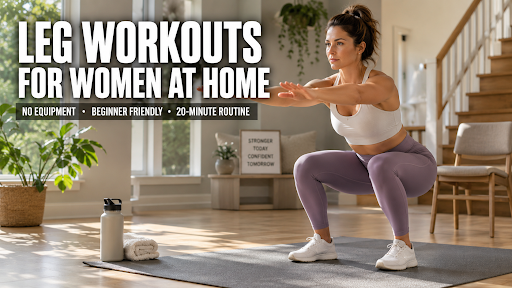
For four long months, I did not use my gym membership until I realized that my current inactivity results from my busy schedule rather than any lack of commitment. Each week, I promised to go to the gym “next week” only to find out that it does not work like that, as my two-year-old wakes up at 6 am and does not care about my plans. The real deal-maker? My living room floor, 20 minutes and three times a week. So if you’re searching for leg workouts for women at home, that’s really the whole secret nobody wants to admit. You don’t need much. A bit of floor. In about 20 minutes, you were probably going to waste scrolling your phone anyway. What You Need for Leg Workouts at Home Very little, almost nothing, in fact. Your very own body weight works to create strength in your legs, particularly at the beginning stages. If your knees complain on hard floors, grab a mat, but don’t let not having one stop you. A sturdy chair helps with a couple of the balance moves later on. Got dumbbells sitting in a closet somewhere collecting dust? Fine, save them for once bodyweight stops being a challenge. I skipped the home gym entirely, and you can too. Warm Up Before Your Leg Workout Two or three minutes, that’s all this takes. Now walk in place for a few steps. Move the legs back and forth a couple of times as if loosening the stiffness. Throw in some easy squats with zero weight. You can skip this step and probably be fine most days, but cold muscles pull easier than warm ones, and there’s a real difference in how the workout feels once your blood’s actually moving. The Full Bodyweight Leg Workout No equipment leg workout, any floor, any room, done in under 25 minutes if you keep moving between exercises. Fifteen reps here, thirty seconds there, whatever’s listed below, then thirty seconds rest before the next move. Get through the full list once, then decide if you’ve got another round or two left in you that day. Bodyweight squats, 15 repetitions. Stand with legs shoulder width apart. Squeeze your buttocks together as if sitting on a chair that is just pulled out behind you. The knees need to move forward over the toes; do not collapse inwards. How far down you can go is good. Reverse lunges, 10 per leg. Step a foot back and drop that back knee toward the ground. Most of your weight should stay in the front heel. This form of forward lunge is more comfortable if you’ve had problems with your knees in the past. Glute bridges, 15 reps. Knees bent, feet flat back on floor. Squeeze and lift your hips until you’re one straight line from knee to shoulder; hold there a second. Doesn’t look like much happening from the outside. Feels like plenty from the inside, trust me on that one. Wall sit, 30 seconds. Slide your back down a wall until your knees hit roughly ninety degrees, like there’s an invisible chair holding you up. Somewhere around the twenty-second mark your thighs start shaking. That shaking means it’s actually doing something. Step-ups, 10 per leg. A sturdy step or your bottom stair works fine. All the way up, then back down slow; resist the urge to just drop. This builds the kind of strength you notice later, like not being winded hauling groceries up to your door. Single-leg deadlift, 8 per leg. Stand on one foot, bend at the hip joint, swing the other foot back behind, and get back up. Wobbly? Hold a wall. I still have to walk around with Wobble every day, I suppose. It takes time to feel more comfortable in this one; don’t expect to feel graceful right away. Calf raises, 20 reps. Stand up on your toes, then slowly lower down; don’t drop. If you need more burn, standing on the edge of a step rather than flat ground will extend the stretch. How to Tone Legs at Home Without Hitting a Wall “Toned” is just muscle sitting under a thinner layer of fat, and you build that over weeks of showing up, not one impressive session. So nudge things forward as you go. Fifteen squats starting to feel like nothing? Bump it to twenty. Did the wall stop burning by thirty seconds? Push for forty-five. A backpack with a couple books tossed in adds resistance once bodyweight alone isn’t cutting it anymore. Frequency beats intensity here by a wide margin, honestly. Two or three short sessions a week for a couple months will outperform one brutal workout followed by two weeks of nothing. Leg Workout for Beginners: Where to Start Begin with three moves per round, then increase as it is no longer difficult. Squats, glute bridges, and calf raises work well together to start easy on the joints, nothing that’ll wreck your knees. And honestly, at this stage, nailing the movement matters more than hitting a rep count. Five careful, slow squats will teach your body more than twenty rushed ones, no contest. If you want a second set of eyes on your form without hiring anyone, the American Council on Exercise has decent visual guides worth a look. Making It Stick Whatever workout you’ll actually repeat beats whatever workout looks best on paper. Pick a time that already fits somewhere in your day, right after coffee, or during a show you’re rewatching anyway; it doesn’t matter which. Skip a day here and there; that’s life. Just pick the routine back up the next day instead of writing off the whole week. Our full library of bodyweight leg exercises for women has more variations worth trying once this particular routine gets too easy. The Bottom Line A gym membership was never the missing piece, not for me and probably not for you either. Floor space, twenty minutes, and repeating something like this often enough that combination does
Breathing Exercises for Anxiety That Work Fast
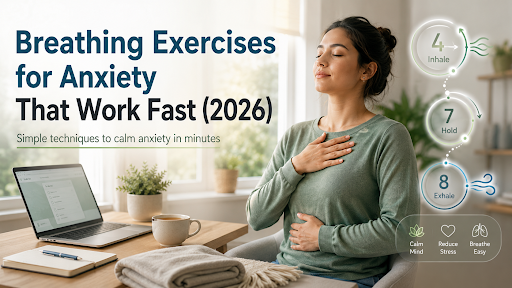
Picture this: you’re sitting in your car before a job interview, and your chest’s already tight, hands cold, maybe with a slight shake to them. Your brain’s already three disasters deep, and you haven’t even walked in the door yet. Anxiety does that. It shows up in your body first, not your thoughts. Took me way too long to figure that out myself. The good news is that breathing exercises for anxiety don’t need much to bring it back down just air, used on purpose. No app, no pills, nothing to buy. You’re already carrying the fix around with you, which honestly feels a little unfair given how much anxiety apps cost these days. So here’s the plan for this post. What to actually do. Why does your body respond to it at all. And how you actually turn it into a habit, not something you only remember mid-spiral. (If racing thoughts tend to show up alongside the physical symptoms, it’s also worth reading how anxiety and sleep feed off each other the two are more connected than most people realize. What Anxiety Actually Does to Your Breathing Your nervous system genuinely cannot tell the difference between a rude email and an actual bear. Same alarm either way short breaths, racing heart, tight shoulders and your whole body is basically shouting one thing at you: something’s wrong, deal with it. That’s your fight-or-flight response kicking in, which is fantastic news if there happens to be an actual bear involved. It’s less great for a Monday standup meeting or a text you’ve been avoiding for three days. Your body just hasn’t gotten the memo that most modern stress won’t kill you. Here’s the one thing that actually works in your favor, though: breathing is the part of this whole mess you can control. You can’t let your heart rate go down. Telling yourself to relax does nothing for sweaty palms. They don’t take orders. But breath listens. It’s the only lever in the whole system that answers when you pull it. How to Calm Anxiety Fast With Your Breath Here’s the whole trick, and I mean the entire thing: breathe out longer than you breathe in. That’s it. Sounds too simple to work. It works anyway.This single principle is the backbone of nearly every one of the breathing exercises for anxiety covered in this guid In through your nose for four seconds. Out through your mouth for six. Slow, like you’re fogging up a window on a cold morning. Do it for one minute just sixty seconds and most people feel a shift before the minute’s even over. The first time I tried it, I figured it was nonsense. Then I caught that my shoulders had already dropped; I hadn’t even asked them to. Why does a longer exhale do anything? That’s your vagus nerve switching on, the one that runs all the way from your brain down to your gut. Breathe out slowly, and that nerve sends one message down the line: stand down; we’re fine. The National Center for Complementary and Integrative Health backs this up. Too slow breathing is safe for most people and can genuinely help with stress and anxiety, not just make you feel like you’re doing something. The 4-7-8 Breathing Method This one’s Dr. Andrew Weil’s, and it’s probably the most Googled breathing technique for anxiety relief out there. There’s a reason. Dead simple, and it’s especially good for the nights your brain just won’t clock out at 11pm. Sit down or lie flat, whatever’s easier. Tongue touches the roof of your mouth behind your front top teeth. Take a deep breath out through your mouth without holding back on that whooshing sound; it’s meant to be heard. Close mouth, and inhale through nose for four counts. Hold for seven. Exhale through mouth for eight counts. One repetition. Start off with four repetitions. Heads up; your first repetition may make you feel a bit dizzy. Completely normal. Nothing to get worked up over. You won’t feel it after your body adjusts to the process. Some people swear by this one right before bed. Others use it seconds before a hard conversation walking into a breakup talk, a performance review, whatever. Same counts, every time, no matter what’s on the other side of it.If a racing mind at night is your main trigger, our breakdown of how anxiety keeps you up at night goes deeper into why this particular method tends to help. Belly Breathing You Can Do Anywhere Belly breathing or diaphragmatic breathing, if you want the fancier term might honestly be the most useful of the three, just because nobody watching you can tell you’re doing it. Hand on your chest. Hand on your belly. Breathe in through your nose and try to get the belly hand to rise more than the chest one. Hold for a second. The next step is to exhale through your mouth to enable your belly to relax completely. Many people usually breathe through their chests rather than engaging the lungs with proper deep breathing.Belly breathing pulls in more than that, and more air is basically a signal to your body that it can stand down. Do it for two or three minutes. In line at the grocery store. Stuck in traffic. Or standing outside a door you’d rather not walk through. Not glamorous, not exciting. Just works. Building a Daily Practice, Not Just an Emergency Fix Most people only pull out breathing exercises when things are already going sideways. Fair enough, that’s when you notice you need them. But the people who actually get results practice on the boring, nothing-is-wrong days too. Think of it less like a fire extinguisher and more like exercise for your nervous system. You don’t wait until your back is already thrown out to start stretching. Same idea here. Build the habit before the bad day shows up, so it’s already loaded when you need it. Five minutes in the morning is
Easy Meal Prep Ideas for Beginners: A Simple Start
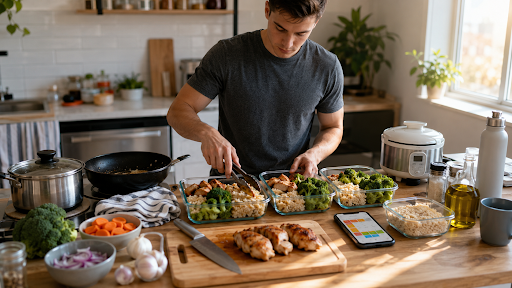
Last month Marcus messaged us. He had just moved into his first apartment with one pot, one pan and a rice cooker his sister had passed down after she moved to a new apartment. Cooking became another task for him as he found himself eating cereal and whatever else was listed on his delivery app almost every day. If you have heard of this situation before, you are not alone. There are a number of people who get into such situations not because they need to change their whole dietary habits, but because they are simply fed up with spending $18 on unhealthy food. The great thing about this is that you don’t have to have a fully equipped kitchen or a free Sunday afternoon! One pan, a handful of ingredients and something that is simple enough that you’ll do it again. How to Start Meal Prepping for Beginners Nearly all those who stop meal prepping do so for the same reason: they began too large. They set aside a week of planning and purchase 10 items that they’ve never used in their cooking, and by Wednesday half of it is looking pretty bad in the fridge. So don’t do that. Choose two days that you can dedicate: most people will choose Monday and Tuesday. Cooking all three proteins and grains together. That’s it. This is the entire first attempt. One easy one to try is chicken thighs, rice and broccoli. Season with salt, pepper and garlic powder and bake at 400°F until cooked, approximately 25 minutes. In the meantime add rice. Add broccoli and toss for the last 5 minutes to prevent it from getting mushy. Split it up and two days of meals! When this seems like a reasonable amount, substitute another vegetable or a second protein. There’s no rush. The point of week one isn’t a perfect system it’s just proving you can follow through on something small. Simple Meal Prep Tips That Actually Work None of these are groundbreaking. They just work. Cook a protein once and use it two different ways. Cook a bunch of chicken breast, and Monday, it’s a burrito bowl; Wednesday, it’s on top of a salad. You don’t eat the same thing twice and your shopping list remains short. Some foods are more suitable for the fridge than others, so plan accordingly. Sweet potatoes, brown rice, roasted vegetables, grilled chicken all good for a couple of days. Lettuce and sliced avocado don’t keep well, so make sure you eat them on the day you intend to eat them, not day one. If you’re roasting vegetables, add all the spices to a bowl and season before serving on the pan. This saves you from having to wash 5 separate dishes and really makes the food taste better when it’s not seasoned as an afterthought. Give yourself fifteen minutes right after eating to deal with the dishes. Wash the pans while they’re still warm dried rice stuck to a pot at ten at night is nobody’s idea of a good time. The Beginner Meal Prep Containers Worth Buying Skip the matching container sets from the kitchen store. What actually matters is that the lid seals and the thing survives a microwave. The initial investment is higher, but they don’t stain, don’t smell like last week’s curry and can be reheated directly in the container with the locking lid. Five to six should last for the majority of a week. If money’s tight, plastic is genuinely fine too; just double-check it says “microwave-safe” on the bottom before you buy a stack of them. The one thing to avoid is a lid that doesn’t fully snap shut nothing kills the momentum of a new habit faster than sauce leaking through your bag on day two. Easy Meal Prep Ideas for Beginners You Can Cook This Week A handful of combos that hold up past day one, since that’s really the test that matters. The turkey and rice bowl is basically dump-and-go: ground turkey, rice, black beans, corn, salsa, one pot, half an hour. And somehow it’s better on day four than day one. Salmon with roasted asparagus and quinoa looks fussy. It’s not 12 minutes in the oven at 400°F, and lemon, salt, and pepper do most of the work. Overnight oats are the lazy option: 10 minutes, no stove, lasts all week. Oats, milk, a spoonful of peanut butter, whatever fruit’s about to go bad in the fridge.No stove involved. And if you want the lowest-effort option on this whole list, it’s chili. Ground beef, beans, canned tomatoes, and chili powder simmered for half an hour get you four or five meals, and it freezes well. If you double it, in the future you will be relieved on the one week everything else goes sideways. Meal Prep Mistakes to Avoid Here’s the thing nobody tells beginners: the mistake isn’t in the cooking. It’s trying to do too much on the first try. People who plan a full week before they’ve successfully done even one day tend to burn out fast. Start smaller than feels necessary two or three days is plenty at first. Another that gets people is not having a list when they go shopping. You end up picking up random items that don’t really go together and a piece of it goes to waste. Also, portioning food into individual containers immediately after cooking, rather than into one large shared container. Dividing it while it’s fresh is a lot easier than trying to split up a cold, congealed mass later, and you’ll actually grab a single meal instead of picking through the whole batch. Food safety matters here too. USDA’s guidelines on safe food storage,recommends refrigerating cooked meals within two hours and eating them within three to four days. Past that window, freeze it instead of gambling on whether it’s still fine. Meal Prep on a Budget If you do it correctly, meal preparation should be affordable, and not more expensive than