Two minutes until the meeting. Your heart is doing something weird, your hands are cold, and the slide you just opened has a typo in the title. Ugh. You can’t exactly walk out. What you can do is breathe, and this is where box breathing techniques earn their keep. The whole thing takes about a minute.
No app. No gear. Just counting to four. Let’s go through how it works, why people swear by it, and what usually goes wrong.
What Are Box Breathing Techniques?
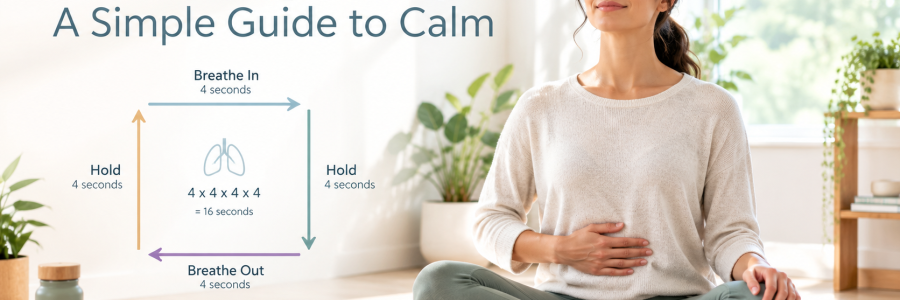
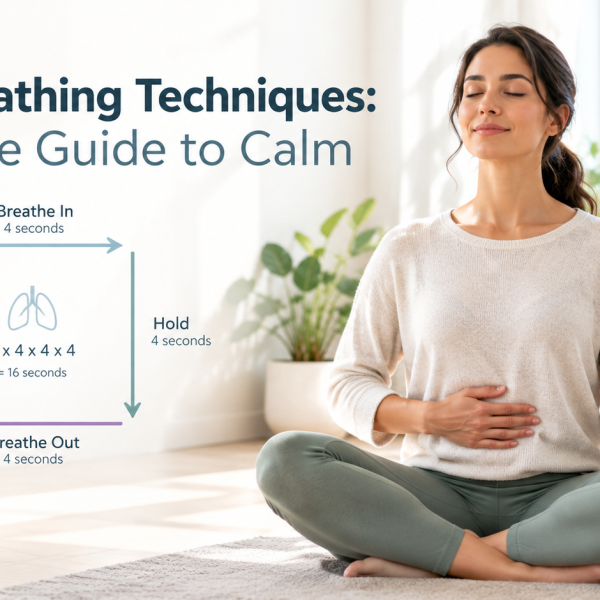
Box breathing (some people say square breathing) is a slow pattern with four equal sides. Breathe in. Hold. Breathe out. Hold again. Each side lasts about four seconds, so if you drew it, you’d get a little square. That’s the name.
A full round is 16 seconds. Four rounds take less than a minute. People resort to box breathing exercises before an important presentation, after a stressful phone conversation, or any other time when their minds seem overly busy. It fits into the field of breath work and meditation, but it does not seem mystical. It feels more like pressing pause.
How to Do Box Breathing, Step by Step
Sit tall with your feet flat. Drop your shoulders (they’ve probably crept up toward your ears). Now the box breathing exercise itself:
- Push all the air out.
- Breathe in through your nose for a count of four.
- Hold it for four.
- Let it out through your mouth, slowly, for four.
- Stay empty for four.
That’s a round. Do three or four, then notice how you feel. The first try can feel awkward, and that’s normal. The good news about box breathing techniques is that there’s nothing to buy and only one number to remember.
Try this trick: rest a hand on your belly. Belly moves on the inhale? Good. Only your chest lifts? Then you’re breathing high and shallow, so let the belly go out first. And if four seconds feels like too much, use three. Or two. What matters is that all four sides match.
Box Breathing Techniques for Stress
So why would counting to four calm anyone down? Blame your stress response. When you’re wound up, your body goes into fight or flight, and your breathing gets quick and shallow. Slow, even breaths do the opposite. They switch on the parasympathetic nervous system, the rest-and-settle side of things. Melissa Young, an integrative medicine doctor at Cleveland Clinic, says studies show steady breathing can lower cortisol (the stress hormone) and might help blood pressure too. She explains it all on Cleveland Clinic’s box breathing page.
There’s a second thing going on. Counting is a job. Your brain can’t easily chew on a problem and keep track of numbers at the same time. Young calls it a kind of mantra meditation, which is a fancy way of saying it gives your mind something dull to do. Want more quick resets? Box breathing techniques and other guides live at FitForce Lab. Try a round in a grocery line or at your desk. Nobody will notice.
Box Breathing for Anxiety
Anxiety and rapid breathing go together. You are nervous, so you breathe rapidly, and that makes you even more nervous, and you breathe even more rapidly. Box breathing lets you step off that ride. In the middle of a spike, box breathing techniques give a jumpy brain a task, and sometimes that’s enough to take the edge off.
It won’t cure anything, though. It is a means for the immediate time being. Should your anxiety be an everyday concern or should it begin to interfere with your ability to get your work done or even get some sleep, you should go see a professional.
Box Breathing for Sleep
Imagine it’s 2 a.m., and your brain is stuck on an embarrassing memory from 2019. Do a few cycles while lying in bed. The steady counting keeps your mind busy with something tedious, which is exactly what you need at that time of day.
Shoot for about five minutes prior to bed. The box breathing method needs to be performed in the context of a nightly ritual: At the same time every night, turn off your phone. Does it solve your sleeping problem? Perhaps not by itself. It’s too early for science on this, but use it as an effective technique. Lie down flat, reduce the holds if necessary, and lower the lighting.
Navy SEAL Breathing: Where It Came From
You’ll often see this called Navy SEAL breathing. Former SEAL commander Mark Divine helped make it famous through his SEALFIT and Unbeatable Mind programs, and Healthline says athletes, nurses, and police officers use it too. Equal-count breathing is way older, though. Yoga has its own versions.
Another name is 4-4-4-4 breathing, which is the same thing.But when you get comfortable with four, you can increase it to five. According to Divine, most people breathe 16 to 20 times in one minute, but doing four seconds in a cycle would mean four breaths in a minute. Thus, yes, it is odd for some people.Whatever you call it, box breathing techniques are the same simple count.
Common Mistakes With Box Breathing Techniques
Most problems come from effort. People gulp air on the inhale or clench during the holds. Ease off. It should feel smooth enough that you could keep going for ages. Drop your shoulders and skip the fake calm. Just count.
Getting dizzy? Beginners do sometimes. Stop, breathe normally, and use shorter counts next time. And if you have a heart or lung condition, or you’re pregnant, ask your doctor before adding breath holds.One more thing: don’t save it for your worst moment. It’s easier to pull off in a crisis if you’ve practiced when you’re calm. Young suggests three rounds, twice a day, to build the habit.
Start Your Box Breathing Techniques Practice Today
Pick one moment tomorrow. Right after you wake up, maybe, or before you open your inbox. Do four rounds. That’s it. Then try again when something stressful lands and see if it feels different. For more calm and breathwork guides, keep exploring box breathing techniques at FitForce Lab. Your breath goes everywhere you go. Might as well put it to work.
Box Breathing Techniques FAQ
What is box breathing?
A slow pattern with four equal parts: breathe in, hold, breathe out, hold. Each part usually lasts four seconds.
How long should I do box breathing?
A few rounds, about a minute, is plenty to start. Many people work up to five minutes a day.
Does box breathing help with anxiety?
Box breathing can help you relax on the spot through slowing your breathing. This does not substitute medical treatment, so consult a doctor in case of chronic anxiety.
Can box breathing help you sleep?
Many individuals use this technique to prepare for sleeping. Although more research is required, consider box breathing as an additional tool for relaxation.
Is box breathing safe for everyone?
Most healthy individuals may engage in it. However, if you suffer from heart disease, lung disease, or if you are pregnant, consult your doctor first.