
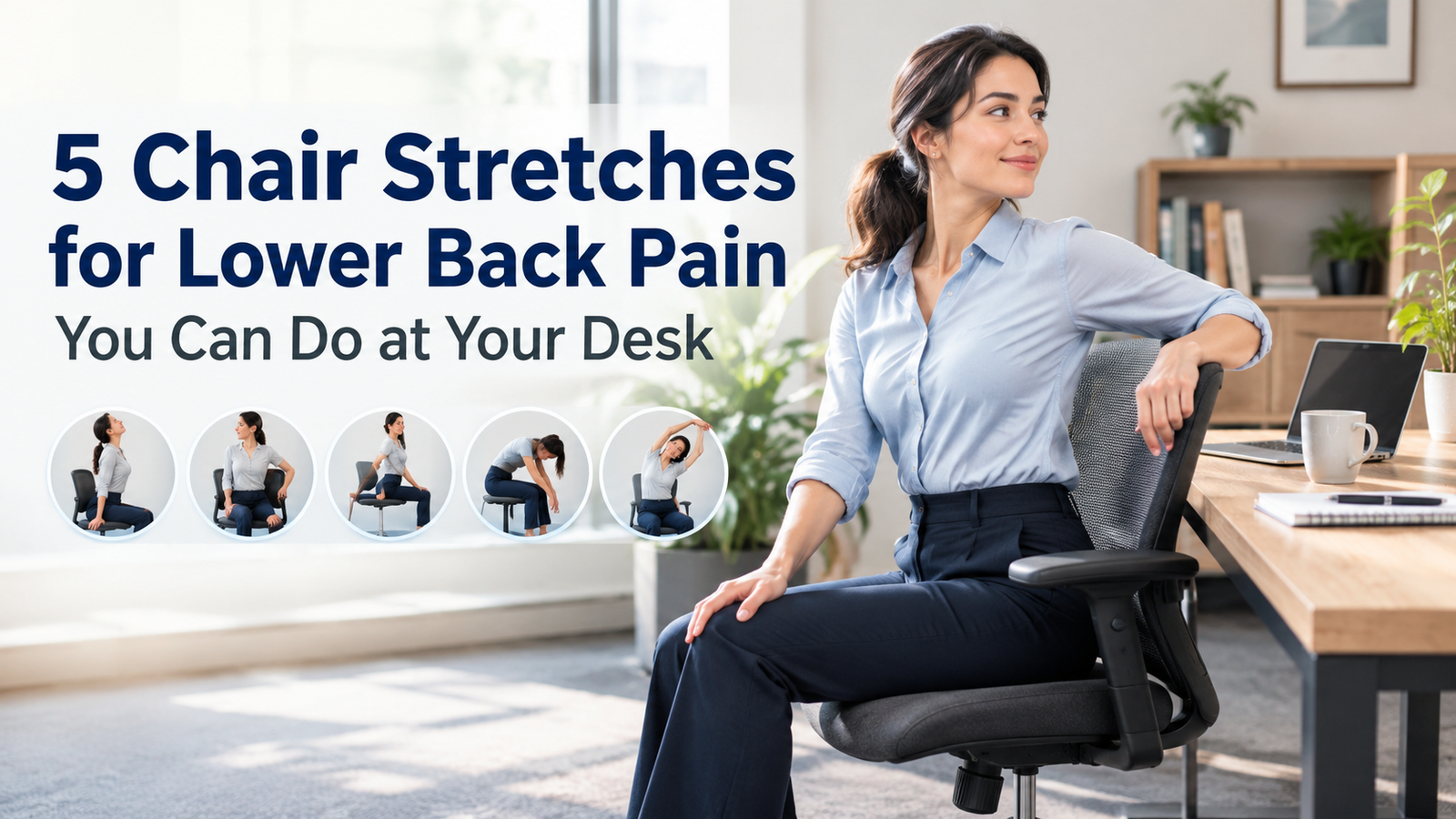
Every day, at the same time in the afternoon, my back would lock up until I figured out that it wasn’t the chair’s fault. It was mine for sitting in it for hours without moving. If your back starts complaining somewhere between lunch and your next meeting, a new chair probably isn’t the fix either. You just need to move a little, and you can do that without standing up. That’s the whole idea behind chair stretches for lower back pain. No mat, no changing clothes, just a few minutes you can steal between calls. Why Sitting Can Cause Lower Back Tightness Sitting shortens your hip flexors and lets your glutes go quiet, and somewhere in that trade your lower spine loses the curve it’s built to have. Do that eight hours a day, and it adds up fast. Your lower back usually ends up covering for everything else that’s gone stiff around it, which is probably why it’s the part that speaks up first. People ask me all the time if a fancier chair fixes this. Sometimes, a little. But you can spend three hundred dollars on ergonomic everything and still end up stiff if you never move. How to relieve lower back pain while sitting really comes down to short, frequent breaks. Not better furniture. Cat-Cow, Without Leaving Your Desk Position yourself on the edge of your chair with both feet planted on the ground. Inhale and then lift your chest up. Exhale and then round your back while tucking your chin in. Repeat 8 or 9 times. It looks too simple to do anything, which is probably why most people skip it. But it’s one of the few office chair stretches for back pain that undoes an hour of hunching in under two minutes. I’ve actually timed it. The One That’s Basically Invisible Place your right hand behind the chair, the left hand on your right knee, stand firmly, and twist slowly while you look back over your shoulder. Remain in position for twenty seconds and change to other side. This is the one I default to on long calls, since it just looks like you’re reaching for something behind you. Seated lower back stretches like this work through the muscles running alongside your spine, and it’s the one I actually remember to do, mostly because nobody can tell I’m doing it. Your Hips Are Probably Part of the Problem Shift forward, extend the left leg backward so that the knee bends towards the floor, maintain the position of the right leg, and slowly shift the hips forward till you get a sensation of pulling in the front part of your hips. Twenty seconds, change the leg, but be careful not to change the leg abruptly because the hip flexors may become tight in an uneven manner according to the leg that you habitually cross more often. The tightness of the hip flexors causes a pulling effect at the lower back; hence the back problem could sometimes be a hip problem. Release both areas and it will generally reduce, although it might take one or two weeks. End the session with a forward bend (the torso hanging loosely between the knees for thirty seconds) and a side bend (the upper arm pointing upwards, bend to the other side).Neither one is exciting. Both do more than they should for how little effort they take. How to Make Chair Stretches Part of Your Workday This is where most people fall off, myself included some weeks. It’s not that chair yoga for lower back pain doesn’t work. That’s because everyone always forgets about it until the pain comes back. Make it something you do automatically, such as immediately after closing your computer at lunch time. This is much more effective than any phone alert that you will ultimately swipe out of the way. When Lower Back Pain Needs Medical Attention Stretches handle everyday tightness. They don’t handle everything, and it’s worth saying that plainly. The Mayo Clinic notes that pain following an injury, or pain paired with numbness or weakness in your legs, needs a doctor rather than another stretch. MedlinePlus says something similar about pain that sticks around past a few weeks. If either sounds like you, make the appointment before you try stretch number six. How Long Does It Take to Feel Better? Pick two to three of these to do tomorrow, not “someday.” You will definitely notice a change by Thursday or Friday.For more moves that need nothing but a chair, check out our beginner-friendly stretches and yoga sequences page. Add a short walk once or twice a day and a bit of core work on top of this, and your back will have noticeably less to complain about. More like this over at Fit Force Lab if it helped. FAQ Can I just do these instead of actual exercise? Not really. They’re good for daily maintenance, but walking or some light strength work will do more for your back over time. Does this really work, or is it just one of those things people agree with? Yes, it works for some everyday aches and stiffness. It won’t cure any injury, but for soreness after the working day, a couple of minutes of stretching can bring real relief. How often should I be doing this? At least every hour if you are stuck at your desk all day long. A little bit of stretching every hour beats one longer session after the day is done. Do I need a yoga mat or resistance bands or anything? Not at all. The only thing one needs to do a stretch is a chair that doesn’t roll away! Does my back hurt more after doing nothing all weekend than during my workweek? Is that normal? Yes, that is. It simply means that your body needs more movement rather than less.